Showing posts with label fishing. Show all posts

Wednesday, July 30, 2008

Sitka Alaska Shoot

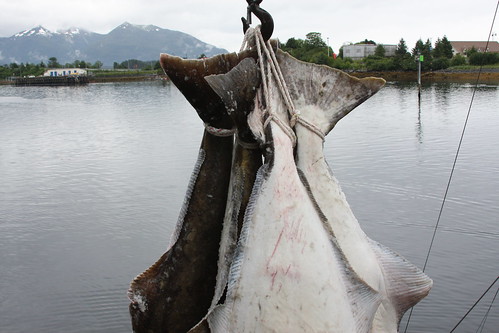
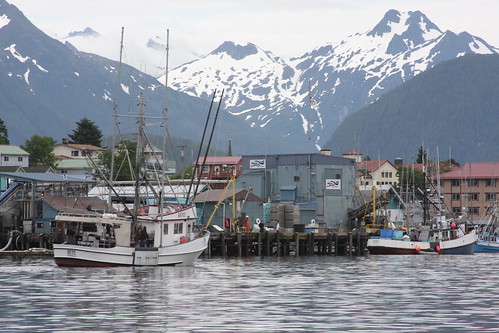
We just returned from a week shoot in Alaska. We went up there to tell a success story about the halibut fishery. It was quite an amazing trip. The landscape and people were wonderful. I went up a few days early before our director and camera/sound crew arrived to do some scouting and to meet the fishermen/women and fish processors in person.
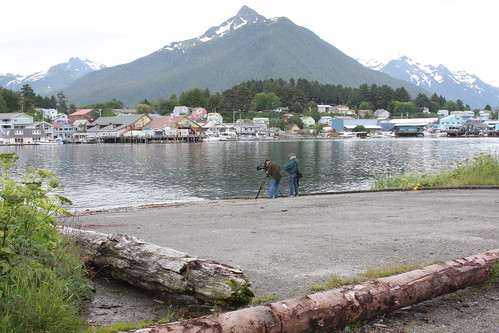
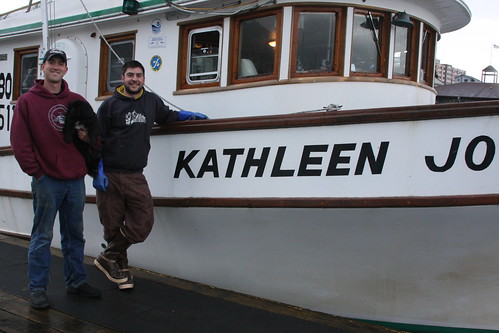
Prior to our arrival, we had a hard time getting fishermen and fisherwomen to commit to interviews and fishing trips over the phone. So I hit the ground running. My job was to find as many halibut fishers as possible. But I also needed to find someone to take us out on a boat so we could film halibut fishing. This was not so easy. It was salmon season, and the majority of boats were focusing on salmon. Plus the weather looked like it was going to get really bad by the time the crew arrived. So I lucked out and found a boat called the Kathleen Jo heading out for a two-day halibut trip. I did some fast-talking, and within an hour I was on board heading out to sea with two kind fishermen.
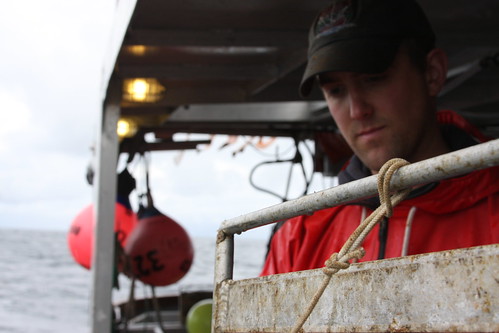
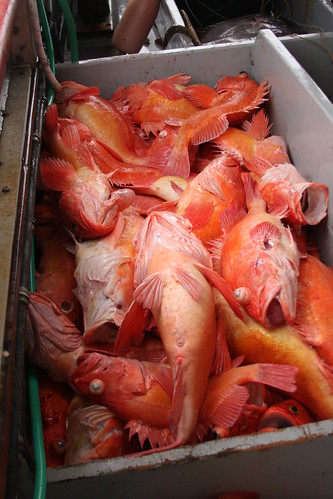
I had brought my HDV video camera and a tripod. I am not sure why I bothered to bring the tripod. It was completely useless on a boat. I ended up getting some nice footage of the fishermen setting three sets of long-line gear. I got a little nauseous, but managed to keep all my cookies to myself. It’s hard to keep your balance, look through a viewfinder, and not get seasick. By the second day I had my sea legs and filmed the fishermen catching halibut without feeling like I might need to find the leeward side of the boat. They only caught about 30 halibut, but that was plenty for me to film. They said it was the worst catch they had ever had. But 30 halibut ended up being over 600 pounds. They caught twice the pounds of yelloweye. It’s a kind of orange rockfish. The fishermen said yelloweye is actually tastier than halibut.
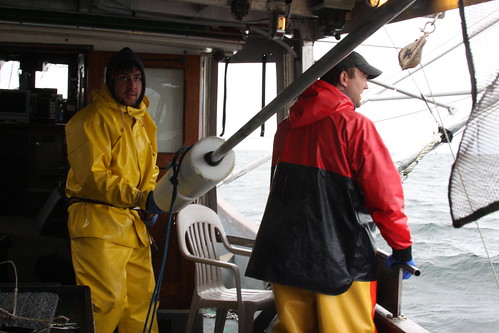
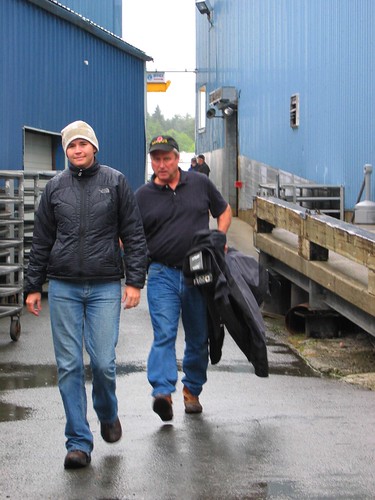
By the middle of the second day, the weather report was calling for gale force winds, so we headed back to Sitka. The director, Rob Whittlesey and the cameraman, Harry Dawson, met me at the dock. Later we met up with our sound mixer, Phillip Powell and went out for the first of many fabulous seafood meals.

The next day we went to a fish processor and filmed several boats offloading their halibut catches.

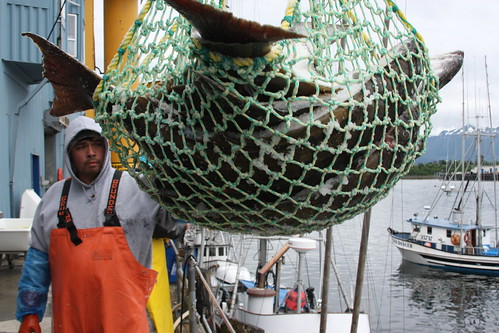
Since the weather turned bad, it had chased all the fishing boats back to port. So we had lots to film. And what’s more, the weather was going to stay bad, which meant we were able to interview the fishermen/women of Sitka. If the sun had come out, we would have been out of luck.
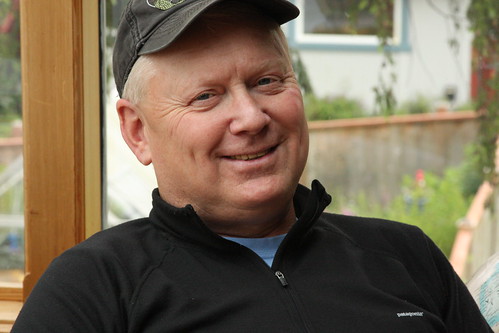
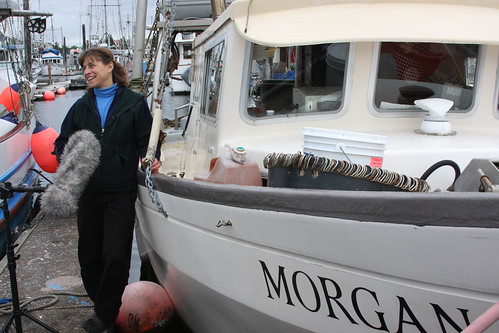
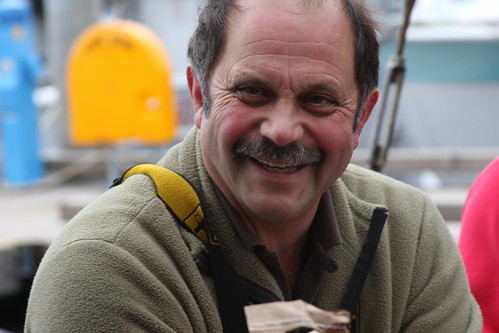
All in all, the shoot went very smooth and we got the footage we hoped for! Click HERE to see all the photos from the shoot.

Friday, July 13, 2007

Africa Shoot: Kumasi July 12, 2007

After arriving in Kumasi, we made our way to the market place, which is an experience that I will never forget. We merged with a sea of people, the likes of which I've never experienced. The markets were densely packed, and we were guided by Michael Afranie, a famous television and movie actor, through a very tight labyrinth of stalls, buildings and ally ways, passing cobblers making shoes, textile workers, and vendors selling a myriad of goods -- electronics, fruits and vegetables, live animals, smoked animals, freshly slaughtered animals, toys, etc. It's not an understatement to say the market was sensory overload, and we briskly moved forward as if swimming up stream to our destination: the Queen Mother of the fish market.

The Queen Mother was a young, attractive woman in her early forties and she received us with a big smile and warm greetings. She was glad that we had arrived, but if truth be told she was more delighted to see Michael-- everybody was! Michael is very famous and well liked, and its easy to see why. He's a very handsome man, quick to smile, who wears a floppy hat and beard, who carries himself with the laid back sense of nobility. After much discussion and laughter between The Queen Mother and Michael, she gave us her blessing to shoot the following day, and were promised the cooperation of the rows of vendors that she represented. We stayed in the market a little while, scouting positions for the camera. As we left, we were carried by the flow of people back to the streets, and I was filled with a strange sense of belonging, and let the sights and sounds wash over me.

After a short drive through people and cars all jostling for position, we arrived at the bush meat market, where animals are brought from the countryside to be butchered and prepared for sale. In stark contrast to the fish market, the Queen Mother of the bush meat market was more reserved, guarded and cynical. She was an old woman, dressed in a black dress and black scarf, which she wore on her head. She sat on a wooden bench with one bare foot on the ground and the other leg stretched out in front of her. She told me to sit beside her and placed her finger on the bench to tell me exactly where to sit. As I sat, Michael and Teddy, our fixer, negotiated our shooting permit. The Queen was very reluctant. Bush meat is largely illegal and she feared that we had come in part to help shut down her businesses. Both Michael and Teddy took their time, listening to all of her concerns as well as those of her constituents. It was touch and go for a while and all I could do was sit and smile. At one point the conversation turned to me. The Queen Mother seemed to recognize me. She'd seen me before and was convinced I had been in Kumasi. Despite the efforts of Teddy and Michael, she was convinced that she knew me. She fixed me in her gaze as the conversation continued around her. How could I tell her that I felt the same way, that I'd been here before? In my dreams before my trip I'd travelled many times, alone at night, flying through sky before arriving to walk the streets and countryside of Ghana. Abruptly, the Queen looked away from me. She spoke to Michael and Teddy. Our request to film had been granted.

Africa Shoot: Ghana Part 2

This morning we arrived back in Jamestown to shoot the return of the local fishing fleet. We gained permission to shoot from the Fisheries Council and were guided by two ambassadors, Akonte and Niikommey. We were also met by Lamtui (a.k.a. Apna). Apna is a bit of a local celebrity. Officially he would be called a Canoe Group Leader. Unofficially, he is a gang leader, and it was obvious that he was held in very, very high esteem. As we filmed, our guides and our production fixer, Teddy Sabutey, negotiated with each canoe group, paying tribute as we moved.

Typically, we were met with a great deal of shouting, anger and hand waving, which lasted about a minute until everybody realized that we were being escorted. As soon as nerves were settled, we were then greeted by big smiles, cheers and laughter. This scene repeated itself over and over again during our shoot. At first, the rough and tumble atmosphere was a little unnerving, but very quickly we got into what would become the dominant rhythm of the day. (Incidentally, and it should come as no surprise, but it was pointed out that most Ghana's great boxers come from fishing communities. Having spent a few short hours in Jamestown, it's easy to see why that's the case.)


As the boats were being pulled in, the fishers sang beautiful sounding chants that were actually typically very off-color and vulgar. Many of the chants were made up on the spot, but some catch on and become part of the local "tradition."

The Jamestown community is predominantly made up of the Ga Tribe, approximately 85%. The other large majority come from the Fente Tribe.

Virtually all of the fishers are men. It was pointed out that in Jamestown there is one woman who goes out on the boats. Women make up the majority of the buyers and they await the return of the fleet each morning. Negotiations take place right on the shore as the boats land and the women load the fish that they buy into large metal pots. Many of the fish wind up at the market, which is less than a mile away, although we did film a woman buy from a fisher, turn around, take two steps and sell her entire take. (Sometimes the lines of commerce are very short!)

Among the fish we saw coming off the boats: tuna, mud crab, shrimp, giant sea snails, cassava, red fish, herriing, baracuda, and octopus.
As were were finishing our shoot, we were approached by a very angry fisher who shouted at us in native Ga, "When you are finished and get what you want, put fish back in the ocean!" In essence, he was trying to tell us that he had gained nothing from our presence. If only he knew our goal.

Among the fishers of Ghana, we came across another Pittsburgh Steeler fan!

In the afternoon, we headed north looking for baboons in the countryside about 45 minutes of Accra.


Moses Sam, Cole Burton and Justin Brashares, our featured scientists, join the search.


Stephen Aflo, a five year field guide of the Ghana Wildlife Division served as our guided. Stephen helped us try to find any of the fifteen troops that live within the Shai Hill Reserve.

With luck and skill, Stephen lead us to a troop of baboons that are habituated to humans.