Showing posts with label documentary. Show all posts
Showing posts with label documentary. Show all posts
Friday, October 2, 2009
Sea Studios Wins Two Major Awards at the Jackson Hole Wildlife Film Festival
Sea Studios Foundation is proud to announce that we have won two awards at the Jackson Hole Wildlife Film Festival. Sea Studios won Best 360 Campaign for our Think Beyond Plastics campaign. The 360 Award is given to the campaign package that most effectively utilizes multiple distribution platforms and formats, including: broadcast, theatrical, live-event, internet, venue specific display, gaming, mobicast, and any other distribution to enrich an appreciation or understanding of the natural world and the relevant issue. Sea Studios' film Once Upon a Tide won Best Children's Film. That award is given to the program that most effectively inspires an appreciation of the natural world, or issues associated with animals and the environment, to young audiences. Kudos to all!


Wednesday, September 30, 2009
Wednesday, July 30, 2008
Sitka Alaska Shoot
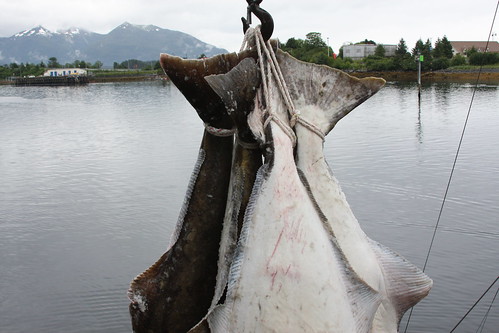
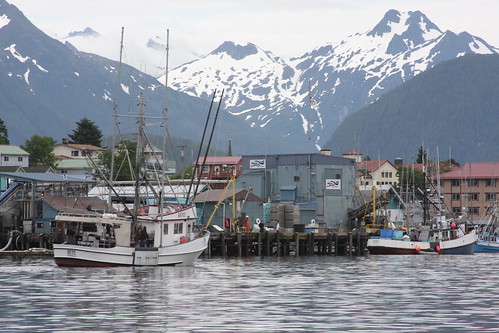 We just returned from a week shoot in Alaska. We went up there to tell a success story about the halibut fishery. It was quite an amazing trip. The landscape and people were wonderful.
 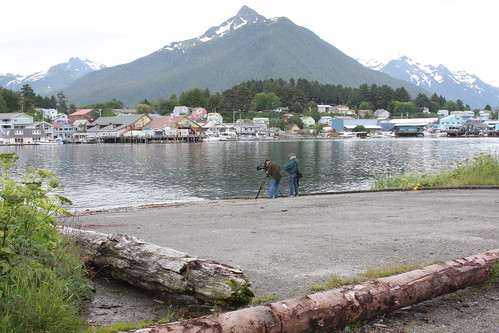 I went up a few days early before our director and camera/sound crew arrived to do some scouting and to meet the fishermen/women and fish processors in person.
Prior to our arrival, we had a hard time getting fishermen and fisherwomen to commit to interviews and fishing trips over the phone. So I hit the ground running. My job was to find as many halibut fishers as possible. But I also needed to find someone to take us out on a boat so we could film halibut fishing. This was not so easy. It was salmon season, and the majority of boats were focusing on salmon. Plus the weather looked like it was going to get really bad by the time the crew arrived. So I lucked out and found a boat called the Kathleen Jo heading out for a two-day halibut trip. I did some fast-talking, and within an hour I was on board heading out to sea with two kind fishermen.
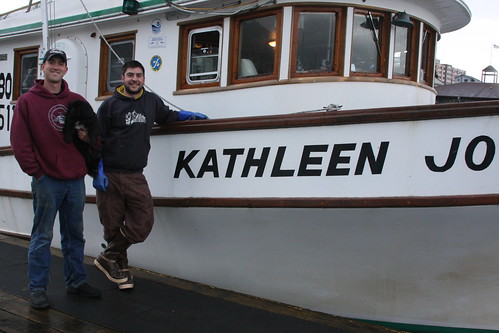
I had brought my HDV video camera and a tripod. I am not sure why I bothered to bring the tripod. It was completely useless on a boat. I ended up getting some nice footage of the fishermen setting three sets of long-line gear. I got a little nauseous, but managed to keep all my cookies to myself. It’s hard to keep your balance, look through a viewfinder, and not get seasick. By the second day I had my sea legs and filmed the fishermen catching halibut without feeling like I might need to find the leeward side of the boat. They only caught about 30 halibut, but that was plenty for me to film. They said it was the worst catch they had ever had. But 30 halibut ended up being over 600 pounds. They caught twice the pounds of yelloweye. It’s a kind of orange rockfish. The fishermen said yelloweye is actually tastier than halibut.
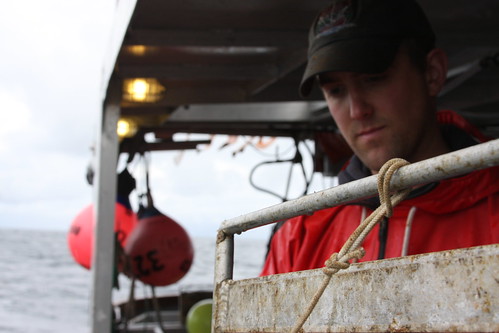
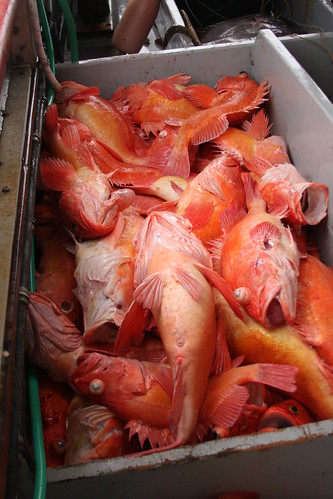
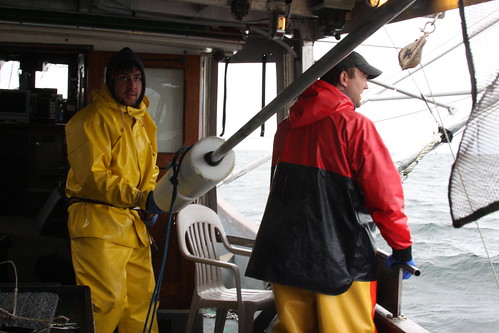
 By the middle of the second day, the weather report was calling for gale force winds, so we headed back to Sitka. The director, Rob Whittlesey and the cameraman, Harry Dawson, met me at the dock. Later we met up with our sound mixer, Phillip Powell and went out for the first of many fabulous seafood meals.
The next day we went to a fish processor and filmed several boats offloading their halibut catches.

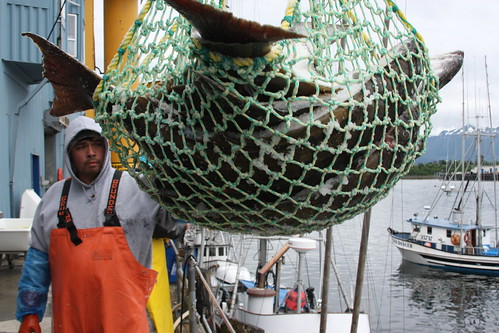
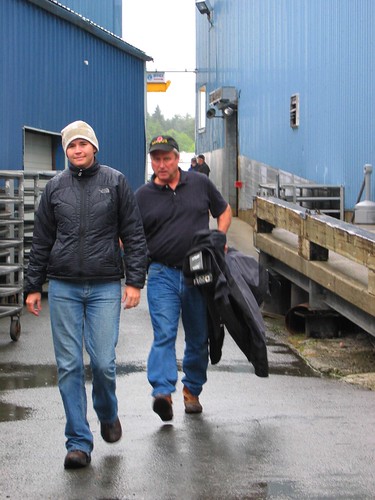 Since the weather turned bad, it had chased all the fishing boats back to port. So we had lots to film. And what’s more, the weather was going to stay bad, which meant we were able to interview the fishermen/women of Sitka. If the sun had come out, we would have been out of luck.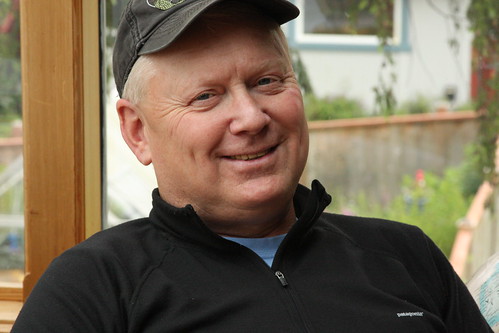
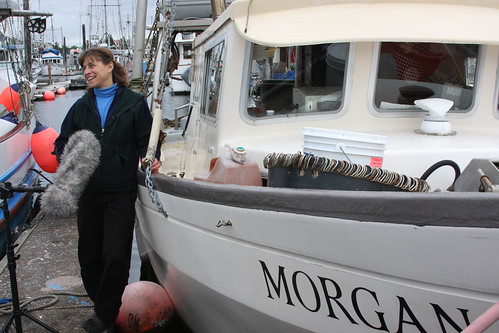
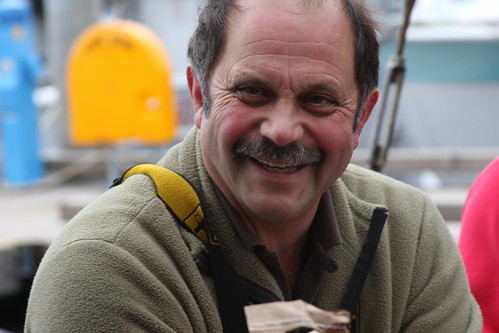 All in all, the shoot went very smooth and we got the footage we hoped for! Click HERE to see all the photos from the shoot.
Wednesday, March 26, 2008
Two new web videos by Sea Studios
Dr. Sumaila, director of the Fisheries Economics Research Unit at the University of British Columbia Fishery Center, talks about overfishing, its impact on the Ghanaian economy, and the global ramifications of a fish shortage in Africa.
Captain Charles Moore, founder of the Algalita Research Institute, highlights some of the problems of plastic contamination.
Friday, March 21, 2008
Strange Days on Planet Earth Premiere in Washington DC
After weeks of color correction and sound mix at the Skywalker Ranch, we are finally ready to show our film at the Environmental Film Festival in Washington, D.C. We arrive to find the lobby of National Geographic decorated with large Strange Days posters; the ticker outside the building invites people to come and watch. Overwhelming, exciting and a bit unnerving. Then we begin to worry whether we will fill the auditorium.
We worry in vain.
In front of a full audience, Strange Days displays all its glorious colors, sounds and exciting scenes. The audience gasps at the sight of albatross chicks bellies full of plastic and responds loudly at scenes that excite them.
The final credits roll at a thundering applause. Yes. It is a success! Now we must spread the word: watch April 23rd on PBS.
Here's a taste of what's to come on Season II of Strange Days on Planet Earth:
We worry in vain.
In front of a full audience, Strange Days displays all its glorious colors, sounds and exciting scenes. The audience gasps at the sight of albatross chicks bellies full of plastic and responds loudly at scenes that excite them.
The final credits roll at a thundering applause. Yes. It is a success! Now we must spread the word: watch April 23rd on PBS.
Here's a taste of what's to come on Season II of Strange Days on Planet Earth:
Wednesday, January 30, 2008
Strange Days on Planet Earth Host Shoot


Well it finally happened...we filmed our host, Edward Norton in LA. We would have filmed him earlier in the month, but a freak storm put an end to that plan.
The second planned shoot went very smoothly. Our line producer, Brook Holston spent weeks working on the pre-production plans. We only had two days, but we managed to film all of the scenes starring Edward Norton for both new episodes of "Strange Days on Planet Earth". "Dirty Secrets" and "Dangerous Catch" will be premiering on PBS in April 2008 (the day after Earth Day).


This shoot was especially exciting for me because I was brought on as the still photographer. This was the first time I had been on a crew where it was my sole responsibility to take photos. Normally, I am a PA (production assistant), so my job usually consists of doing whatever anyone tells me. Plus, I always take photos anyway. But this time I had the pleasure of focusing on just the photography. Also, someone hooked me up with a headset so I could listen in to all the production-speak. I am a scientist and a photographer by background, so the whole LA film scene was new to me.
 We had a 40 person + film crew this time. There were assistants for the assistants! Everything had to be perfectly choreographed so that we could film Edward Norton at all of the correct locations in the perfect light. We shot at a pier, a culvert, a fish market, a parking lot, a beach, and a water treatment plant.


 Imagine getting that many people set up, tore down, and moved around in just two days. Kudos Brook!
Friday, August 17, 2007
“Once Upon a Tide”
Sea Studios Foundation, Monterey, CA 8/15/07.
In addition to producing science documentaries like “Shape of Life" and "Strange Days on Planet Earth" , we are starting to depart from traditional science narratives. “Once Upon a Tide” is a live-action / animated fable designed to touch people’s hearts by witnessing the journey of a little girl named Olive. Olive lives in a world, set in a time, not unlike our own, where a spell has been cast causing people to forget about the ocean and its importance to our lives. Luckily for Olive, she finds a shell that helps open her eyes to the magic of the ocean. Here are some stills from the film:


 Animation created by LAIKA/house
Yesterday we shot two of the live action scenes in Monterey. We had what I thought was a big crew, a director, a DP, a sound recordist, an AC, a grip, a gaffer, two caterers, several producers, a child actress, her mother, a make up artist, a prop designer, me, and a crane operator. I guess that isn’t big by Hollywood standards, but it was the biggest shoot I had been on.


 Everything went great. Olive, our star was good as gold. The weather cooperated for the most part. We thought our big hero, dune jib shot would be ruined by fog. But the sun came out just in time and we were rewarded with a beautiful sunset. It was a fabulous day!

Signing off for now...Hannah Smith Walker (Sea Studios Production / Post Coordinator)
In addition to producing science documentaries like “Shape of Life" and "Strange Days on Planet Earth" , we are starting to depart from traditional science narratives. “Once Upon a Tide” is a live-action / animated fable designed to touch people’s hearts by witnessing the journey of a little girl named Olive. Olive lives in a world, set in a time, not unlike our own, where a spell has been cast causing people to forget about the ocean and its importance to our lives. Luckily for Olive, she finds a shell that helps open her eyes to the magic of the ocean. Here are some stills from the film:


 Animation created by LAIKA/house
Yesterday we shot two of the live action scenes in Monterey. We had what I thought was a big crew, a director, a DP, a sound recordist, an AC, a grip, a gaffer, two caterers, several producers, a child actress, her mother, a make up artist, a prop designer, me, and a crane operator. I guess that isn’t big by Hollywood standards, but it was the biggest shoot I had been on.


 Everything went great. Olive, our star was good as gold. The weather cooperated for the most part. We thought our big hero, dune jib shot would be ruined by fog. But the sun came out just in time and we were rewarded with a beautiful sunset. It was a fabulous day!

Signing off for now...Hannah Smith Walker (Sea Studios Production / Post Coordinator)
Harry Potter and the search for the perfect children’s bedroom
Sea Studios Foundation, Monterey, CA 8/15/07.
While most everyone at Sea Studios was out having grand adventures in Africa, I had my own quest in Monterey. I had three weeks to find the perfect sand dune and the perfect children’s bedroom for an upcoming documentary called “Once Upon a Tide”. It was great trekking all around Monterey finding all different shapes and sizes of sand dunes.
But the bedroom was another story. I had struck out at every turn finding the mythical perfect child’s bedroom. But luckily, a boy named Harry Potter led me to a woman named Tammy.
The night before the new Potter book came out, I found myself in a library-sponsored trivia contest. I didn’t know a soul in the audience, but I noticed one of my competitors seemed to know everyone. Scores of people held up placards supporting a woman named Tammy and her daughters in Harry Potter trivia domination. Tammy wiped the floor with me and ended up winning the competition. When I went up to her to congratulate her, I surprised her by asking to take pictures of her daughters’ bedrooms. She gave me quite a funny look, as I tried to explain that I was scouting locations for Sea Studios. It all came out in a nonsensical rush, but fortunately a woman near by perked up and said, “Sea Studios, I know Sea Studios, they make wonderful films”.
So, to make a long story short Tammy showed me her wonderful home, and two weeks later a giant film crew invaded her house.
While most everyone at Sea Studios was out having grand adventures in Africa, I had my own quest in Monterey. I had three weeks to find the perfect sand dune and the perfect children’s bedroom for an upcoming documentary called “Once Upon a Tide”. It was great trekking all around Monterey finding all different shapes and sizes of sand dunes.

But the bedroom was another story. I had struck out at every turn finding the mythical perfect child’s bedroom. But luckily, a boy named Harry Potter led me to a woman named Tammy.

The night before the new Potter book came out, I found myself in a library-sponsored trivia contest. I didn’t know a soul in the audience, but I noticed one of my competitors seemed to know everyone. Scores of people held up placards supporting a woman named Tammy and her daughters in Harry Potter trivia domination. Tammy wiped the floor with me and ended up winning the competition. When I went up to her to congratulate her, I surprised her by asking to take pictures of her daughters’ bedrooms. She gave me quite a funny look, as I tried to explain that I was scouting locations for Sea Studios. It all came out in a nonsensical rush, but fortunately a woman near by perked up and said, “Sea Studios, I know Sea Studios, they make wonderful films”.
So, to make a long story short Tammy showed me her wonderful home, and two weeks later a giant film crew invaded her house.
Monday, August 6, 2007
Bronwen’s Road
July 29, 2007. Desert outside Swakopmund, Namibia.
When Namibia first gained its independence in 1990, the newly established fisheries Ministry had inherited a series of difficult challenges. For years, foreign fishers had been exploiting the rich fisheries off the coast with reckless abandon, ultimately depleting the stocks to devastating proportions. The Ministry set out a series of bold strategies to improve the stocks. Its ideas were progressive, science-based and testament to the spirit of the country's new constitution where sustainable use of resources is a cornerstone.
 When Bronwen first arrived at the Ministry of Fisheries, her career path was clearly charted . . .
 . . . she set out to study the near shore ecosystem, with a singular focus . . .
 . . . but soon after her arrival, when she first learned of the hydrogen sulfide explosions, she veered off her immediate course, took a road less traveled and helped to address a mystery that many suspect needs to be considered in fisheries management -- the sulfide eruptions.
When Namibia first gained its independence in 1990, the newly established fisheries Ministry had inherited a series of difficult challenges. For years, foreign fishers had been exploiting the rich fisheries off the coast with reckless abandon, ultimately depleting the stocks to devastating proportions. The Ministry set out a series of bold strategies to improve the stocks. Its ideas were progressive, science-based and testament to the spirit of the country's new constitution where sustainable use of resources is a cornerstone.
 When Bronwen first arrived at the Ministry of Fisheries, her career path was clearly charted . . .
  . . . she set out to study the near shore ecosystem, with a singular focus . . .
  . . . but soon after her arrival, when she first learned of the hydrogen sulfide explosions, she veered off her immediate course, took a road less traveled and helped to address a mystery that many suspect needs to be considered in fisheries management -- the sulfide eruptions.
The Big Think
July 28, 2007. Swakopmund, Namibia.
 In a warehouse we all gather to block out the sequence. In the sequence, Scarla, Andy and Bronwen would be discussing their theories as to what was causing the eruptions of hydrogen sulfide.
 Before shooting, Scarla, Andy and Bronwen take this opportunity to get some work done. In reality these three mostly collaborated virtually via e-mail and phone conversations. Given the chance to actually be in the same room, they never missed a moment when they could dive into their data and work face-to-face.
 In a warehouse we all gather to block out the sequence. In the sequence, Scarla, Andy and Bronwen would be discussing their theories as to what was causing the eruptions of hydrogen sulfide.
  Before shooting, Scarla, Andy and Bronwen take this opportunity to get some work done. In reality these three mostly collaborated virtually via e-mail and phone conversations. Given the chance to actually be in the same room, they never missed a moment when they could dive into their data and work face-to-face.
Welwitcha
July 27, 2007. Walvis Bay, Namibia.
 For days, Kathy Peeard has been making miracles happen. She got us permission to film at the lighthouse in Swakopmund. She helped us scout locations at the Ministry, ran interference, greased wheels and basically made all of our jobs that much easier. Kathy and Bronwen even helped to arrange a special expedition on the research vessel Welwitcha. This was a great treat for all of us. For Mark Knobil and me, the experience brought back memories of more than a decade ago when we both set sail (twice) to film at the Titanic in the Atlantic. For Brook, who had just finished producing a series of specials focused on ocean conservation, it was a welcome change to the driving, flying and hiking we'd been experiencing for nearly a month.
 The happy faces of Richard . . .
 . . . Brook. . .
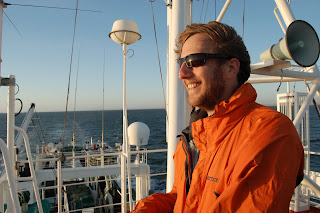 . . . Chad . . .
 . . . Chris . . .
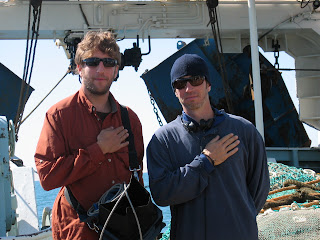 . . . Chad and David . . .
 . . . Mark and Chad. . .
It was great to be out at sea!
 For days, Kathy Peeard has been making miracles happen. She got us permission to film at the lighthouse in Swakopmund. She helped us scout locations at the Ministry, ran interference, greased wheels and basically made all of our jobs that much easier. Kathy and Bronwen even helped to arrange a special expedition on the research vessel Welwitcha. This was a great treat for all of us. For Mark Knobil and me, the experience brought back memories of more than a decade ago when we both set sail (twice) to film at the Titanic in the Atlantic. For Brook, who had just finished producing a series of specials focused on ocean conservation, it was a welcome change to the driving, flying and hiking we'd been experiencing for nearly a month.
 The happy faces of Richard . . .
  . . . Brook. . .
  . . . Chad . . .
  . . . Chris . . .
 . . . Chad and David . . .
  . . . Mark and Chad. . .
 It was great to be out at sea!
Subscribe to:
Posts (Atom)